PMO Robotics / Active Project 02
Bridge Crawler
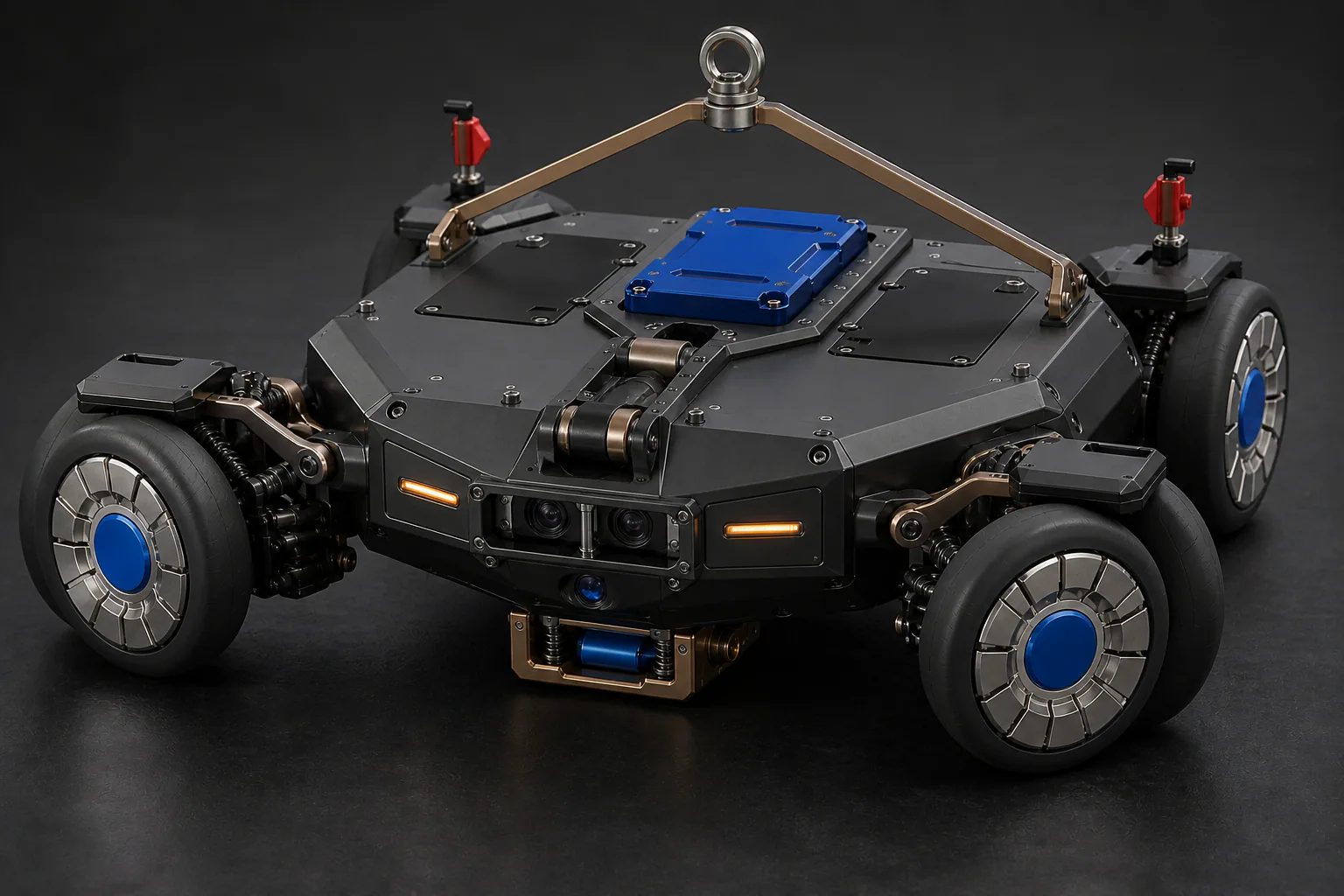
A low-profile, tether-capable inspection platform whose articulated center spine and four independently compliant magnetic wheel pods are intended to maintain contact across weld crowns, plate steps and mild steel curvature.
Authority boundary: Bridge Crawler does not certify a bridge, replace a qualified inspection team, or make structural-safety decisions. The owner and qualified professionals retain responsibility.
01 · Project Dossier
Problem, user and first outcome
ProblemSafer, repeatable access to steel members and confined structures.UserBridge-owner teams and qualified engineering consultants.First customerDOT, public works, port, rail owner or industrial facility.First outcomeTraverse a controlled steel rig and create a traceable evidence report.ExcludedDiagnosis, load rating, certification and unsupervised deployment.GateProceed only if adhesion, retrieval, data and control tests pass.
02 · Locked Prototype Requirements
V2 surface-compliance baseline
MobilityFour driven magnetic wheel pods with short trailing links, compact spring-dampers and pivot sensing for controlled forward, reverse and turning.Rig test
ComplianceLimited roll and pitch through a protected two-axis center spine so wheel pods can follow weld crowns, plate steps and mild curvature without relying on chassis flex.Articulation test
EnvelopeTarget ≤ 500 × 350 × 180 mm and ≤ 15 kg before tether.Measure
RetentionDesigned adhesion safety factor ≥ 3 on every approved test surface; independent rated retrieval tether overhead.Load test
RuntimeTarget ≥ 60 minutes mixed motion with ≥ 20% indicated reserve from a removable top battery cassette.Endurance
ControlSupervised teleoperation, wheel-contact monitoring, loss-of-link stop, physical and remote emergency stop.Fault test
EvidenceTimestamped stereo imagery, position reference, wheel-pod angle, operator notes and sensor metadata.Audit
NDE payloadProtected transverse slide with a spring-loaded contact ultrasonic probe; instrument selection remains open.Expert review
EnvironmentV2 controlled dry testing only. No ingress or temperature rating is claimed.Boundary
03 · Prototype Versions
Build progression
- Rig ZeroOne magnetic wheel pod: motor, braking, suspension travel and adhesion characterization.
- AlphaTethered four-pod chassis with the limited-roll/limited-pitch center spine on horizontal and vertical steel.
- BetaStereo vision, grazing lights, probe slide, contact telemetry, positioning and report output.
- Field CandidateOnly after independent safety review and owner authorization.
04 · BOM and Budget
Estimate—not supplier quotes
Chassis and fabrication$2,000–$4,500Motors, drives, magnetic wheels$2,800–$6,000Control, power, communications$1,500–$3,000Cameras, lights, positioning$900–$2,000NDE integration allowance$1,500–$4,000Tether, fixture and spares$1,300–$2,500Total range$9,000–$22,000
05 · Use Cases and Customers
Start narrow, then expand
Outreach categories: state/local DOT innovation teams, public works, bridge consultants, University Transportation Centers, NDE specialists, ports, rail owners and risk engineers. No partnership is claimed until verified.
06 · Test Gates
Evidence before field use
G1Adhesion by surface and orientationG2Stop, rollback and tether arrestG3Wheel contact across weld crowns, plate steps and mild curvatureG4Spine limits, pod travel, runtime and thermal behaviorG5Loss-of-link and emergency stopG6Image repeatability and traceabilityG7NDE against reference blocksG8Inspector/operator usability review
07 · Safety Gate
Non-negotiable controls
- Rated tether and exclusion zone for elevated tests.
- No live-traffic use in the initial phase.
- Document pinch, crush, dropped-object and battery hazards.
- Pre-run surface inspection and adhesion coupon.
- Qualified inspector owns scope and interpretation.
- Separate review for rail, confined, energized, explosive or underwater sites.
- Protect imagery and sensitive infrastructure data.
08–09 · Partners and Funding
Official paths to qualify
University Transportation CentersResearch and validation partner route.Partner path · verify fitUSDOT SMARTPublic-agency demonstrations; normally needs an eligible public lead.Monitor eligibilityHorizon EuropeRequires a suitable call and eligible consortium.Monitor callsEU PILOTING precedentRobotic inspection pilots for bridges, tunnels and industry.Precedent · not open funding
10 · Sponsor Package
Concept narrative
Phase I funds a tethered prototype, controlled test structure, documented safety gates and inspector-reviewed evidence report. Success is a repeatable controlled demonstration—not a certified bridge decision.
11–13 · Control Record
Documents, owners and audit
Owner PMO Robotics / project sponsorAssign Mechanical, controls, NDE and inspector leads2026-08-23 Dossier, baseline and V1 render created2026-08-24 Rig Zero detailed-design and procurement package publishedNext Reviewer sign-off, then controlled supplier RFQsGate No purchase or test before required reviewsUnverified No quote, supplier selection, engineering approval or test result yet
14 · Verified Partner Intake
Field-test partner requirements
AuthorityPermission to use the test asset.Qualified leadNamed inspection professional.Safe siteControlled steel fixture first.Success criteriaAgreed defects and report review.Data termsSecurity, ownership and retention.RiskSite review and insurance.
Official Evidence
Plausible—and bounded
FHWA inspection rules emphasize qualified personnel, documented procedures and quality assurance. USDOT has supported magnetic-wheel inspection robotics, and the EU funded broader robotic inspection pilots. These sources justify research; they do not validate this prototype.
Engineering Foundation
Rig Zero test package
The bench-test package includes the planning BOM, adhesion-test protocol, risk register and advance/stop criteria. It defines intended tests; it does not record completed testing.
Open Rig Zero package →Active Engineering Gate
Detailed design and procurement review
The quote-ready component criteria, 150 N preliminary wheel target, guarded fixture architecture, supplier RFQ requirements, test-data template and procurement controls are ready for engineering review. The 150 N value is a preliminary selection target—not a measured result.
Open detailed design →Selection matrix. Available on request.RFQ requirements. Available on request.Test-data template. Available on request.Procurement checklist. Available on request.